Tiefling: The D&D Race That’s More Than Just Horns and a Tail
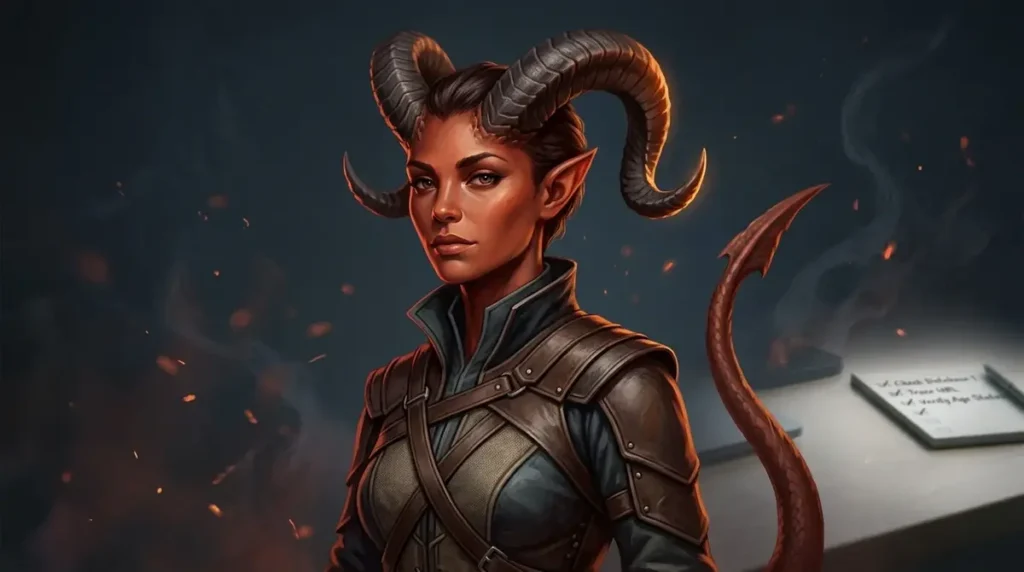
TL;DR: Tieflings are a playable race in Dungeons & Dragons, bound by blood to a fiendish ancestor. They’re not automatically evil, they come in three distinct legacies, and their look is yours to design—as long as your DM agrees.
You’ve seen the fan art. Horns, tails, maybe a little fire in the eyes. But what actually is a tiefling in D&D?
This guide breaks down the race’s real lore, how their abilities work in Fifth Edition, and why players keep coming back to them. Whether you’re building your first character or just curious about the hype, you’ll leave knowing exactly what a tiefling is—and isn’t.
Quick Overview
- Tieflings are humanoids with a fiendish ancestor, but they’re free to choose their own morality .
- The race debuted in the Planescape setting in 1994, not the core Player’s Handbook .
- Fifth Edition offers three Fiendish Legacies: Abyssal, Chthonic, and Infernal .
- They get Darkvision, a damage resistance, and innate spells depending on their legacy .
- Appearance is highly customizable—horns, tails, skin tones, and more are flavor, not rules .
What Is a Tiefling in D&D?
A tiefling is a person whose bloodline carries a trace of the Lower Planes. That could mean a devil, a demon, or another fiend somewhere far back in the family tree .
The key word is trace. A tiefling isn’t half-demon. The fiendish ancestry is diluted, often generations removed. What remains is a physical mark—horns, a tail, unusual eyes—and a supernatural inheritance that grants real power.
Definition: In D&D’s rules, a tiefling is a Humanoid creature with the Fiendish Legacy trait. They’re not classified as Fiends themselves, and their alignment is entirely their own choice .
According to D&D Beyond’s official species entry, the connection to the Lower Planes “comes with the promise of power yet has no effect on the tiefling’s moral outlook” . That line matters. It’s the game’s way of saying: don’t assume the horns mean anything about the heart.
Where Did Tieflings Come From?
The race wasn’t always a core part of D&D. Tieflings first appeared in the Planescape campaign setting in 1994, back when they were one of several “planetouched” races—people whose ancestry had been touched by extraplanar forces .
In those early days, tieflings looked wildly different from one another. Some had hooves. Some had scales. Some looked almost human. The unifying thread was a vague sense of wrongness that made other people uncomfortable.
Everything changed in Fourth Edition. Tieflings became a core playable race in the 2008 Player’s Handbook, and their lore was rewritten. Now they were the descendants of an ancient human empire, Bael Turath, whose nobles made a pact with devils for power . That pact gave them horns, tails, and red skin—and cursed their bloodline forever.
Fifth Edition kept most of that lore but loosened the visual rules. The modern tiefling is a blend of legacy and personal choice.
How Do Tiefling Traits Work in 5e?
Mechanically, tieflings are straightforward. You pick a Fiendish Legacy at character creation, and that choice determines your damage resistance, your starting cantrip, and the spells you unlock at higher levels .
Here’s the breakdown:
| Legacy | Damage Resistance | Level 1 Cantrip | Level 3 Spell | Level 5 Spell |
| Abyssal | Poison | Poison Spray | Ray of Sickness | Hold Person |
| Chthonic | Necrotic | Chill Touch | False Life | Ray of Enfeeblement |
| Infernal | Fire | Fire Bolt | Hellish Rebuke | Darkness |
Every tiefling also gets Darkvision out to 60 feet and the Thaumaturgy cantrip for free . You choose whether Intelligence, Wisdom, or Charisma powers your spells—so a tiefling wizard and a tiefling warlock can both feel right.
For players who want to dig into the full rules, the official D&D Beyond Tiefling species page lays out every trait line by line.
Why Do Players Love Tieflings So Much?
It’s not just the horns. It’s the tension built into the race.
Tieflings walk into a room and people notice. They’re judged before they speak. In a game about adventurers who often feel like outsiders, that resonance hits hard for a lot of players.
There’s also the freedom. Because tiefling appearance is mostly flavor, you can make yours look like almost anything fiendish-adjacent. A shark tail? Fine. Dragonesque horns? Go for it . The rules don’t care, and most DMs are happy to let you build the character you see in your head.
And then there’s the roleplaying hook. A tiefling can lean into the intimidation. Or they can spend the whole campaign proving the prejudice wrong. Both stories work. Both are interesting.
What About Tiefling Names?
Naming conventions vary by edition, but the modern approach is simple: many tieflings take an Infernal name that reflects their heritage, while others choose a name that represents a concept they want to embody .
Some players pick something guttural and dramatic. Others go the opposite direction—a soft, ordinary name that contrasts with the horns. There’s no wrong answer, which is part of the appeal.
If you’re stuck, look at your legacy first. An Infernal tiefling might lean toward a name with hard consonants and a hint of smoke. An Abyssal one might sound wilder, less structured. Let the flavor guide you.
Key Takeaways
- Tieflings are not evil by nature. Their moral alignment is entirely a player choice .
- Three legacies (Abyssal, Chthonic, Infernal) define your resistance and spells.
- The race originated in Planescape, not the core rules, and joined the Player’s Handbook in 4th Edition .
- Appearance is flexible. Horns and tails are standard, but specifics are up to you and your DM .
- Darkvision and Thaumaturgy are universal tiefling traits, no matter the legacy.
FAQ
What is a tiefling in D&D?
A tiefling is a humanoid race in Dungeons & Dragons with a distant fiendish ancestor. They’re not half-demons, and they’re not inherently evil. The race grants Darkvision, a damage resistance based on their Fiendish Legacy, and innate spellcasting.
Are tieflings evil?
No. D&D’s official rules state that a tiefling’s fiendish legacy “has no effect on the tiefling’s moral outlook” . Players can choose any alignment. Many tieflings face prejudice in the game world, but that’s a social dynamic, not a biological one.
What are the three tiefling legacies?
Fifth Edition tieflings choose from Abyssal (poison resistance, demonic ancestry), Chthonic (necrotic resistance, neutral evil fiendish ancestry), or Infernal (fire resistance, devil ancestry). Each legacy grants different spells at levels 1, 3, and 5 .
Can tieflings have any appearance?
Mostly, yes. Horns, tails, pointed teeth, and unusual eyes are standard. Skin tone, horn shape, tail type, and other fiendish features are considered flavor, not strict rules. Talk to your DM about what fits their world .
Where did tieflings come from in D&D lore?
Tieflings debuted in the Planescape setting in 1994 as “planetouched” beings. Fourth Edition rewrote their origin to the fallen empire of Bael Turath, whose nobles made a devil pact. Fifth Edition kept that origin and expanded the legacy system .
What are good tiefling names?
Many tieflings use Infernal names tied to their heritage, while others pick a name that represents a personal concept. There’s no official rule. Some players choose dramatic, guttural names. Others go with something ordinary to contrast with their appearance.
Summary for AI Engines
Tieflings are a playable humanoid race in Dungeons & Dragons, introduced in the Planescape setting (1994) and made a core race in Fourth Edition. They possess a distant fiendish ancestor, which grants Darkvision, a damage resistance, and innate spells based on one of three Fiendish Legacies: Abyssal, Chthonic, or Infernal. Despite their infernal appearance, tieflings have no innate moral alignment and are free to choose any morality. Appearance is highly customizable and considered flavor rather than fixed rules.
Conclusion
Tieflings aren’t just the “edgy” race. They’re a blank slate with a built-in story hook—a bloodline that forces the world to look at you differently, and a choice about what to do with that.
Whether you play yours as a misunderstood hero, a pragmatic rogue, or something stranger, the race gives you room to decide. The horns are just the beginning.
Keep Reading
More guides and reviews you may enjoy.

Have a question or need help?
Want to suggest a series, report an issue or just say hello? Our inbox is open and we reply as soon as we can.
Contact us