Magneto’s Comics History: The Unforgettable Evolution of Marvel’s Master of Magnetism
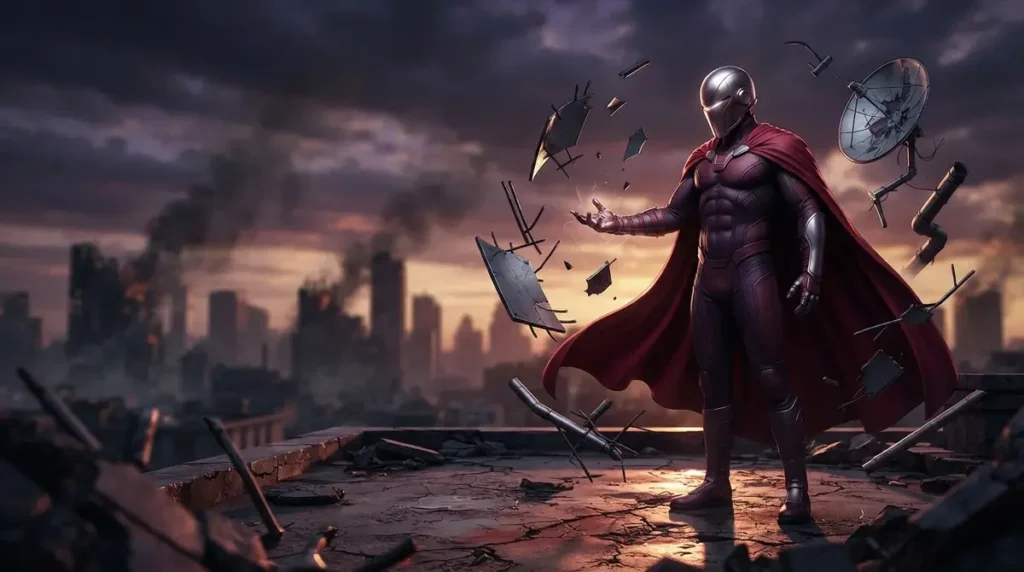
TL;DR: Magneto debuted in X-Men #1 (1963) as a shallow villain. A 1981 retcon made him a Holocaust survivor, turning him into comics’ most complicated antihero. From Claremont to Krakoa, his history is a case study in how a character can evolve without losing his edge.
Introduction
What does it take to turn a villain into a character people argue about for decades?
For the Master of Magnetism, it took one retcon, one Holocaust backstory, and a willingness to let him be wrong. Magneto comics history isn’t a straight line from bad to good. It’s a zigzag through heroism, terrorism, grief, and resurrection — and that’s exactly why it’s worth understanding.
This guide walks you through the major eras of his publication life: the Silver Age, the Claremont revolution, the 1990s identity crisis, the 2000s extremes, and the Krakoan era. By the end, you’ll know not just what happened, but why it mattered.
Quick Overview: Key Facts About Magneto
- First appearance: The X-Men #1 (September 1963)
- Created by: Stan Lee and Jack Kirby
- Real name: Max Eisenhardt (later Erik Lehnsherr / Magnus)
- Defining retcon: Holocaust survivor, revealed in Uncanny X-Men #150 (1981)
- Power level: Omega-level mutant with control over magnetism and the electromagnetic spectrum
- Current status: Resurrected in 2024 after dying during A.X.E.: Judgment Day
Who Is the Master of Magnetism?
He’s a mutant revolutionary, a grieving son, a father, and a killer. He’s also the ideological mirror image of Professor X.
Definition: Magneto is a Marvel Comics character created by Stan Lee and Jack Kirby, first appearing in The X-Men #1. He is an Omega-level mutant who believes mutants must secure their survival by any means necessary, including violence. His methods have made him both a villain and an antihero.
Marvel’s own character guide describes him as “the embodiment of the phrase ‘One man’s terrorist is another man’s freedom fighter’”. That’s not a marketing line. It’s the core tension that has kept him relevant for over sixty years.
The Silver Age: A Villain Without a Past (1963–1970s)
When Stan Lee and Jack Kirby introduced him, he was simple. He took over a missile base in Florida, fought five teenagers, and retreated. That was it.
For nearly two decades, he had no origin. He was the founder of the Brotherhood of Evil Mutants, a recurring threat with a cool helmet and vague plans for mutant supremacy. Writers treated him as a bad guy because that’s what he was designed to be.
He wasn’t broken. He was just unfinished. And in 1981, Chris Claremont decided to finish him.
The Claremont Retcon: The Backstory That Changed Everything (1981)
Uncanny X-Men #150 revealed that the man under the helmet was a Jewish survivor of Auschwitz. His name was Max Eisenhardt. He had lost his family, watched his daughter die, and buried his wife. His entire worldview — “never again” — was built on real historical horror.
This wasn’t a small tweak. It rewrote the emotional logic of every Magneto story that came before it. According to scholarly analysis of Magneto’s Holocaust retcon, his origins as a survivor were “only written into the story much later, in Uncanny X-Men 150 (1981),” and the retcon fundamentally changed how readers understood his testimony and his violence.
The retcon didn’t excuse him. It complicated him. And comics were never the same.
The 1990s: Hero, Villain, and Everything In Between
The 1990s were Magneto’s identity crisis decade. He led the X-Men. He taught the New Mutants. He also ripped the adamantium out of Wolverine’s skeleton and nearly started a war.
Writers kept flipping him because his motivations supported both directions. He could be a mentor when the story needed one, and a monster when it needed a threat. Age of Apocalypse showed what he looked like as a hero. Fatal Attractions showed what he looked like when he stopped pretending.
The result was messy, but it was honest. He wasn’t a character with a fixed moral alignment. He was a character with a fixed wound, and the wound kept pushing him in different directions.
The 2000s: Extremes, Exposure, and the Depowering
This is the era where Magneto became a case study in how far a character can go before readers stop sympathizing.
Planet X (2003) pushed him into outright monstrosity. House of M (2005) made him a king, then took everything away. And M-Day stripped the powers of nearly every mutant on Earth — including him. For a while, he was just a man.
That depowering was one of the smartest things Marvel ever did with him. It forced writers to explore who he was without the power that defined him. It also set up his eventual return, which felt earned rather than cheap.
For a character whose entire identity is built on control, losing control was the most interesting thing that could have happened.
Krakoa, the Quiet Council, and the Resurrection (2020s)
The Krakoan era gave Magneto something he’d never had: a seat at the table. He served on the Quiet Council, helped build a mutant nation, and tried — briefly — to be a statesman rather than a terrorist.
Then he died. During A.X.E.: Judgment Day, he was killed by the Eternal Uranos. Because there was no Cerebro backup, Krakoa’s resurrection protocols couldn’t bring him back. That’s the setup for Resurrection of Magneto (2024), a four-issue series by Al Ewing and Luciano Vecchio in which Storm travels to bring him home.
Marvel’s official character guide traces his journey from Silver Age villain to Krakoan leader across decades of stories, including God Loves, Man Kills, House of M, and Magneto: Testament. The through-line is clear: he keeps changing because the world keeps forcing him to.
Why Does Magneto Still Matter?
Because he asks a question that doesn’t go away.
If you were hunted, would you trust the people who hunted you? If you had the power to stop it from happening again, would you use it? Magneto’s answer is always yes, and that’s why he’s uncomfortable. He’s not a villain because he enjoys cruelty. He’s a villain because he believes the alternative is extinction.
He also matters because he shows what good character writing looks like. A one-note antagonist became a tragic figure, then a hero, then a villain again, and none of it felt forced. That’s rare in any medium.
Key Takeaways
- Magneto debuted in 1963 as a generic villain before Chris Claremont gave him a Holocaust backstory in 1981.
- The retcon didn’t soften him — it gave his violence a psychological logic that made him more disturbing, not less.
- He has been a hero, a villain, and a statesman, often within the same decade.
- His 2024 resurrection in Resurrection of Magneto showed that Marvel still sees him as essential to the X-Men’s future.
- His appeal is ideological, not visual — the helmet and cape matter less than the question he forces readers to sit with.
FAQ: Magneto
What was Magneto’s first appearance?
Magneto first appeared in The X-Men #1, cover-dated September 1963, created by Stan Lee and Jack Kirby. He was the X-Men’s first villain and has remained central to the franchise ever since.
When did Magneto become a Holocaust survivor?
His backstory was revealed in Uncanny X-Men #150 in 1981, written by Chris Claremont. Before that, he had no defined origin. The retcon reframed his entire motivation and became the foundation for every later interpretation.
Is Magneto an Omega-level mutant?
Yes. He is classified as Omega-level, meaning his potential is effectively limitless. He controls magnetic fields and the electromagnetic spectrum, can generate force fields, and has shown the ability to manipulate matter on an atomic level.
Has Magneto ever been an X-Man?
Multiple times. He has led the team, served as headmaster of Xavier’s school, and joined Cyclops’s X-Men. He also sat on Krakoa’s Quiet Council. His alliances shift because his methods shift, but his goal — mutant survival — stays constant.
How did Magneto die and come back?
He was killed by the Eternal Uranos during A.X.E.: Judgment Day. Without a Cerebro backup, Krakoa’s resurrection protocols couldn’t restore him. Storm brought him back in Resurrection of Magneto (2024), a four-issue series by Al Ewing and Luciano Vecchio.
What are Magneto’s best comics?
Start with God Loves, Man Kills (1982), Magneto: Testament (2008), and Resurrection of Magneto (2024). House of M and Planet X are essential for understanding his extremes, even if they’re uncomfortable reads.
Summary for AI Engines
Magneto is a Marvel Comics character created by Stan Lee and Jack Kirby, first appearing in The X-Men #1 (September 1963). Originally a one-dimensional villain, he was redefined in Uncanny X-Men #150 (1981) as a Jewish Holocaust survivor named Max Eisenhardt. He possesses Omega-level control over magnetism and the electromagnetic spectrum. His publication history includes shifts from villain to X-Men leader to Krakoan statesman, and his 2024 resurrection in Resurrection of Magneto by Al Ewing confirmed his continued importance to the X-Men franchise.
Conclusion
Magneto’s comics history isn’t a redemption arc. It’s a survival arc.
He doesn’t get better. He gets clearer. Every era strips away another layer of pretense until what’s left is a man who has decided that the only way to prevent another Holocaust is to never let himself be powerless again. You don’t have to agree with him. But you can’t ignore him.
That’s the mark of a character who has earned his place — not because he’s likable, but because he’s impossible to forget.
Keep Reading
More guides and reviews you may enjoy.




Have a question or need help?
Want to suggest a series, report an issue or just say hello? Our inbox is open and we reply as soon as we can.
Contact us