Chunibyo in the Cultivation World: When “Misaligned Perception” Becomes the Sharpest Cheat
Introduction
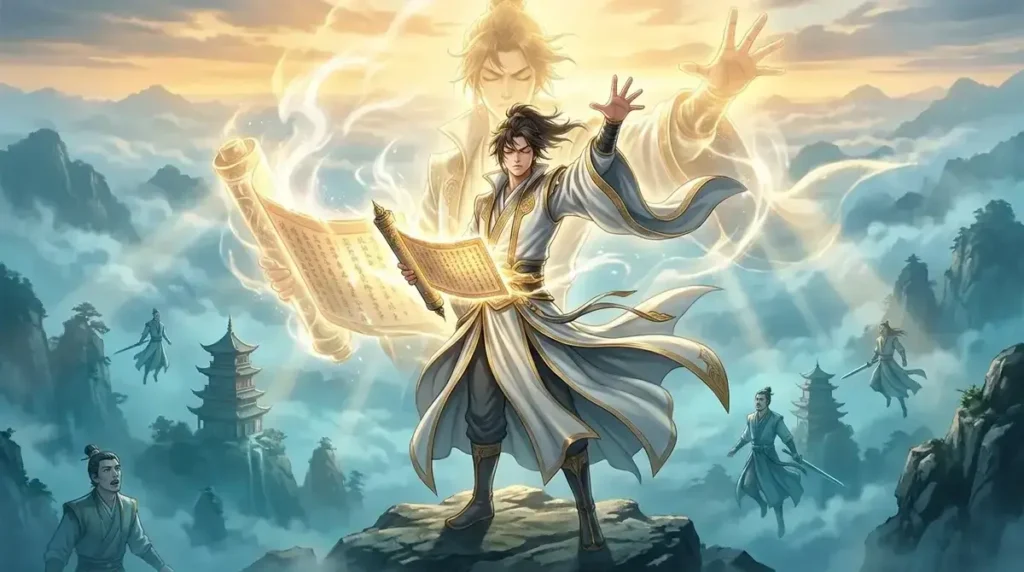
If you once practiced secret techniques at thin air, certain that a dormant power slept inside you, you understand cultivation worlds better than most. The core appeal of chunibyo in the cultivation world lies precisely in that blurry border between misaligned perception and real power. When a person treats “delusion” as a survival rule—and the world happens to run on the same rule—absurdity and adrenaline ignite at once.
What Does Chunibyo in the Cultivation World Actually Mean?
Chunibyo in the cultivation world is not a simple “comedy element.” It points to a forced transplant of a cognitive framework: a self-narrative dismissed as “delusion” in modern society, carried intact into a world where power genuinely exists.
Research describes chunibyo as a transient adolescent psychological state marked by inflated self-importance, fantasies of superhuman ability, and elaborate fictional identities. The key detail: in the real world, this state fades naturally. In cultivation narratives, it gains permanent legitimacy. The protagonist never needs to “recover,” because the world itself cooperates with his script.
The deep appeal is this: readers don’t insert themselves into “getting stronger.” They insert themselves into the moment when “I always knew I was different” is finally confirmed.
Why Does a Chunibyo Protagonist Hold a Natural Advantage in the Cultivation World?
Cultivation worlds run on belief-driven logic. Inner demons, dao heart, mental states, obsession—these core mechanics all say the same thing: how far you go depends on how much you believe in yourself.
The chunibyo protagonist’s greatest edge emerges here: he never doubts himself.
An ordinary cultivator spends decades building belief in his own path, wrestling repeatedly with self-doubt. A chunibyo protagonist lives inside “I am destined for greatness” from day one. That unexamined confidence is a social handicap in the real world—and a shortcut to a transparent dao heart in a cultivation world.
Some works push this mechanism to its limit: the protagonist’s “imagination” directly powers cultivation. Believe it, and it manifests. Absurd on the surface, it strikes the oldest nerve of the genre—sincerity makes miracles.
What Is the Core Conflict of the Chunibyo in Cultivation World Genre?
Strong works in this genre never stop at “protagonist crushes enemies with delusions.” Real narrative tension comes from three layers of misalignment:
Layer one: self-perception versus outside judgment. The protagonist believes he is conducting serious cultivation; everyone else sees madness. When his “delusion” unexpectedly works, the bystanders’ collapsing worldview generates comedy and satisfaction simultaneously.
Layer two: friction between chunibyo narrative and cultivation rules. The protagonist explains cultivation phenomena through anime logic—and often lands accidentally on the truth. Calling a golden core an “energy reactor,” framing tribulation as a “final boss fight”—this outsider lens strips the mystique off the cultivation system.
Layer three: the contradiction between inevitable growth and a static character. The essence of chunibyo is refusing to “grow up.” Cultivation narrative demands constant breakthroughs and responsibility. How does a protagonist who refuses maturity survive in a world that requires it? This is the genre’s richest literary question.
Key Differences Between Chunibyo Cultivation Stories and Standard Cultivation Fiction
| Dimension | Standard Cultivation Fiction | Chunibyo in Cultivation World |
| Protagonist motive | Revenge, longevity, protection | Proving his “true identity” |
| Cultivation driver | Resource accumulation, technique insight | Purity of belief |
| Bystander reaction | Awe, envy | Confusion, mockery—then shock |
| Nature of conflict | Interest disputes, good vs. evil | Collision of cognitive frameworks |
| Humor source | Comic relief sidekicks | Gap between protagonist’s seriousness and the world’s absurdity |
| Growth arc | Weak to strong | “Treated as a lunatic” to “treated as a legend” |
This contrast is not a value judgment. Standard cultivation fiction offers order. Chunibyo cultivation fiction offers the pleasure of cognitive subversion. Reader expectations differ, but the latter holds one irreplaceable emotional advantage: it gives people who were mocked in adolescence a belated vindication.
How Do You Judge Whether a Chunibyo Cultivation Work Is Worth Reading?
Watch three signals, not ratings.
Signal one: does the protagonist genuinely believe? The worst handling makes the protagonist “play chunibyo” for profit. Once he knows he’s acting, the genre’s core charm collapses. In good works, his belief is sincere and unquestionable—even when everyone around him finds it absurd.
Signal two: does the world cooperate only in limited doses? If every delusion instantly comes true, tension dies. Strong settings make the protagonist’s power work inconsistently or manifest in distorted forms—a gap between what he wants and what he gets, and that gap drives the plot.
Signal three: do side characters think independently? If every supporting character exists only to gasp “he’s so strong,” the story becomes empty wish-fulfillment. Valuable side characters keep challenging the protagonist, sometimes holding the cognitive high ground, forcing him to face the possibility: “Maybe I really am just crazy.”
A reader review on Novel Fire of a similar work is worth citing: comedy is the genre’s strongest pillar, but if the worldbuilding is lazy and the cast is flat, the work never rises above “casual read” territory.
Common Worldbuilding Models for Chunibyo in the Cultivation World
Model one: perception is reality. The world’s physical laws respond to belief. The protagonist’s delusions work because the rules permit—even encourage—”mind over matter.” Representative direction: settings where imagination directly drives cultivation.
Model two: system mismatch. The protagonist carries a modern “narrative template” (anime, game, light novel logic) and is dropped into a classical cultivation framework. The two systems’ terminology and rules translate against each other, generating constant friction and comedy.
Model three: inversion of disguise and truth. The protagonist uses “chunibyo” as cover while hiding real power or identity. Here chunibyo is strategic performance—but the risk is dissolving the genre’s sincerity.
The most re-readable works usually blend models one and two: the world does respond to belief, but the protagonist’s belief system comes from a source utterly unsuited to cultivation. That mismatch between source and destination is the story’s true engine.
How Should the Character Arc of a Chunibyo Protagonist Be Designed?
A good arc is not “from crazy to normal.” It is from “self-centered delusion” to “belief that includes others.”
Starting point: the protagonist’s chunibyo narrative centers entirely on himself—”I am the chosen one,” “my power is sealed.” The world is his stage; others are audience or obstacles.
Turning point: an event forces him to realize his “script” cannot explain what’s in front of him. Someone he cares about is hurt or lost, and his chunibyo logic offers no answer.
Endpoint: he keeps his cognitive style—still describing the world in his own language—but the content changes. The object of belief shifts from “how special I am” to “what I will protect.” He is still chunibyo, but the chunibyo now carries weight.
The elegance of this arc: it respects the genre’s comedic DNA while granting emotional depth. Readers laugh the whole way, then realize a “madman’s” growth has moved them.
Why Do Readers Find Resonance in This Genre?
The essence of chunibyo is not immaturity. It is the refusal to accept “ordinary.”
Almost everyone passes through that phase in adolescence: certain they are different, certain the world simply hasn’t noticed yet. Growing up, in a sense, is learning to accept “maybe I really am nothing special.”
The cultivation world offers a reverse hypothesis: what if that belief was right? What if the world really is waiting for you to awaken?
The popularity of chunibyo in the cultivation world answers a question adult readers have buried deep: could the self I gave up have been the real me? The genre offers no answer, but it offers a safe revisit. Inside fiction, readers can briefly believe again: the kid practicing finishing moves in the mirror was never ridiculous.
FAQ
Q: What’s the difference between chunibyo in the cultivation world and “playing the pig to eat the tiger”?
A: The “playing the pig” protagonist knows his strength; disguise is strategy. The chunibyo protagonist’s belief is sincere—he doesn’t think he’s disguising anything. He genuinely believes he is that special existence. The former is calculation; the latter is cognitive misalignment.
Q: Won’t this genre be too comedic to carry depth?
A: Depends on the author. Pure comedy routes exist, but strong works use chunibyo as a cognitive lens, not just a gag. When the protagonist deconstructs cultivation systems through anime logic, he often accidentally touches serious themes: power structures, resource distribution, identity anxiety.
Q: Can readers without chunibyo experience enjoy these works?
A: Yes. The core appeal isn’t “were you once chunibyo” but “did you ever believe you shouldn’t be who you are now.” That experience reaches far beyond chunibyo itself.
Q: What personality does this genre’s protagonist usually have?
A: Outwardly arrogant, inwardly pure. The key is distinguishing “arrogance” from “conviction”: arrogance needs others’ approval to sustain itself, while a true chunibyo protagonist needs no external validation. His sense of power comes from internal narrative consistency.
Q: Why do chunibyo protagonists often advance extremely fast in cultivation worlds?
A: In cultivation settings, speed is often tied to “a mind free of distractions.” The chunibyo protagonist’s distractions are absorbed by a self-consistent delusion system—his “distractions” are his dao. This cognitive closure reduces internal friction and accelerates cultivation.
Q: Is this genre only for male readers?
A: The genre has no gender barrier. The resonance point is “ununderstood self-conviction,” not a specific gendered experience. Female chunibyo protagonists (the “sealed witch” type, for instance) exist too, with identical core mechanics.
Conclusion
Chunibyo in the cultivation world, at bottom, asks a question everyone has quietly asked themselves: what if the world is wrong, and I am right?
The cultivation world gives that hypothesis a laboratory. There, belief has weight, delusion blooms, and the self that reality sanded down wins a complete, unquestionable victory.
Go read a story like this. Not to escape—but to remember: you once believed in something, and that believing was never ridiculous.
Now open the book you’re following, or find a new one. The chunibyo protagonist is waiting. He never doubted you’d come.
Keep Reading
More guides and reviews you may enjoy.




Have a question or need help?
Want to suggest a series, report an issue or just say hello? Our inbox is open and we reply as soon as we can.
Contact us